Common Aluminum Alloy Window Thickness Specifications
1. 1.4mm: Minimum standard thickness for interior windows, used in scenarios where strength requirements are not high, such as interior partitions. Note that this thickness cannot be used on exterior windows during construction.
2. 1.8mm: The lower limit of the national standard for exterior windows. This thickness is generally sufficient for wind pressure resistance in ordinary residential buildings. However, using this thickness in high-rise buildings is questionable.
3. 2.0mm: Recommended for high-rise buildings, offering better wind pressure resistance. From engineering experience, this thickness is the most cost-effective.
4. 2.2-2.5mm: Specifically for super high-rise buildings or coastal areas, providing greater structural stability. We generally recommend this thickness to clients for these types of projects.
5. 3.0mm: Used only in high-end custom profiles, primarily for handling special load-bearing requirements or extreme climates. Using this thickness in ordinary projects would be wasteful.
Applicable Scenarios for Different Thicknesses
1. Low-rise Residential Buildings (1-3 floors)
Standard Thickness: 1.4-1.8mm
Applicable Scenarios: Ordinary casement windows, sliding windows, etc. For these projects, we generally recommend 1.8mm for the best cost-performance ratio.
2. Mid- to High-rise Residential Buildings (4-20 floors)
Recommended Thickness: 1.8-2.0mm
Applicable Scenarios: Exterior windows must be reinforced against wind pressure to prevent deformation. In actual projects, we use 2.0mm for buildings around 20 stories.
3. Super High-rise Buildings (25 stories and above)
Required Thickness: 2.2-3.0mm
Applicable Scenarios: Must be combined with a multi-cavity structure to withstand strong winds. Special attention should be paid to the cavity design of the profiles when selecting profiles for these projects.
4. Coastal Typhoon-prone Areas
Special Thickness: 2.5mm and above
Applicable Scenarios: In addition to thickness, corrosion resistance and impact resistance are also key considerations. In several coastal projects, we only felt confident using profiles with a thickness of 2.8mm.
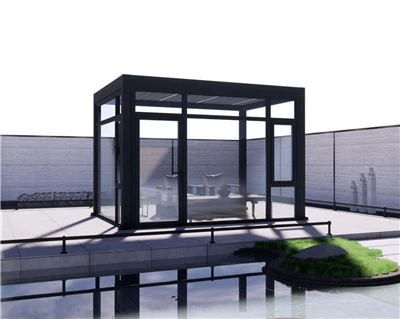
5. Large floor-to-ceiling windows/sunrooms
Reinforcement thickness: 2.0-2.5mm
Applicable scenarios: When additional mullions are required to ensure overall stability. The most common problem in these types of projects is insufficient mullion strength, so adequate thickness is essential.